Rokkon Shou Jou
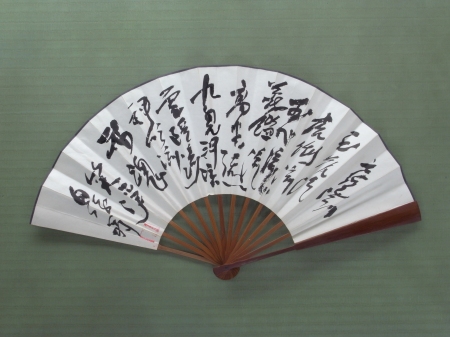
Soke has recently been hinting a new theme. We have yet to have reached the full capacity of this years ( 2009 ) theme ( and may never do ) yet, I thought I would pass on this fresh information. Soke from my understanding, has not gone into any depth as yet. So, I have done some research and will add a superficial explanation of what I have heard to date.
Soke has recently mentioned that the weapon based theme for 2010 is Tachi. He has asked that everyone at least have one sword for practise.

Rokkon Shou Jou
The original meaning of Rokkon Shou Jou as used in Shugendo has a completely different meaning to the way Soke expresses it. Firstly, please understand this.
Secondly, I have offered a brief overview of the original meaning. I have done this for pure interest sake for those inclined to understand the most common understanding of Rokkon Shou Jou by the massess.
Thirdly, I have included the kanji as written by Soke. Soke has expressed Rokkon Shou Jou in a completely different manner by using different kanji. The meaning has therefore completely changed.
Shugendo: Rokkon Shou Jou

The Shinto doctrine called “Rokkon Shojo haraikotoba (mantra of six roots of cleansing mind/heart purification): Kokoro no kessai”.
The doctrine is translated as follows:
The eyes see many kinds of dirt, but the mind/heart does not see any.
The ears hear many kinds of dirt, but the mind/heart does not hear any.
The nose smells many kinds of dirt, but the mind/heart does not smell any.
The mouth talks many kinds of dirt, but the mind/heart does not talk any.
The body touches many kinds of dirt, but the mind/heart does not touch any.
The mind thinks many kinds of dirt, but the mind/heart does not think any.
Although this doctrine seems to suggest that our mind should not be captured by what we see or hear through our five senses and consciousness, It is not the only interpretation. It does not mean that the mind is not influenced by what the senses experience, but rather it means that the mind sees dirt—that is, pain, bad circumstances–in a different way than the eyes do. This notion can be the medicine to build the immunity of the mind
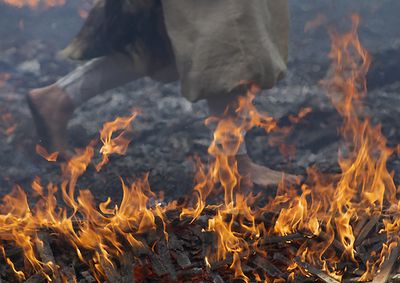
Rokkon Sho Jou 六根清浄 refers to the Shugendja practise of purifying one’s self through the detachment of the six sences.
Rokkon 六根 refers to the six sences.
Sho jo 清浄 refers to purity and immaculate.
The concept of juhachi-kai, or 18 sensory domains consists of three parts. These are the 6 sensory organs, each of which has its respective consciousness, each of which has an object of sensation. The Six Sensory Organs are:
- The Eyes
- The Ears
- The Nose
- The Mouth
- The Body
- The Mind
Each of these gives rise to a sensory consciousness. The Six Sensory Consciousnesses are:
- visual sense; sight or vision
- auditory sense; hearing or audition
- olfactory sense; smell or olfaction
- gustatory sense; taste, or gustation
- cutaneous sense; touch or tactition.
- perception. Perhaps; Balance, Posture?
Each of these 6 faculties has a sensory object or phenomena
- Shape & Color
- Sound
- Aroma
- Flavor
- Texture
- Phenomena
By combining the 6 organs, their consciousnesses, and their objects; we have the eighteen {18} sensory realms or domains 十八界 {juhachi-kai}.
Bujinkan: Rokkon Shou Jou

The kanji used by Soke for Roku 六 is 禄.
When it is combined with Kan such as Kanroku 貫禄, it can mean ” Regal Dignity”, or a person of high status,and influence.
Kon 根 is written as Tamashii, or the ” Soul “.
The kanji used by Soke for Shou 清 is written as Warau, or “ Laugh”.
The kanji used for Jou 浄 is written as 淨. This permeates the meaning of “ Pure, Clear,Cleansing or Purity “.
I will include some words from Soke that were captured by a resident friend ( Sleiman ) about Rokkon Shou Jou.
” Soke said that his rokkon shou jou has nothing to do with shugendo/ja practice and that it was more to do with living and being able to smile which, incidentally, is a natural consequence of forgetting about budo.”
I ( Duncan ) will also add here that Soke stated more recently that the theme of Rokkon Shou Jou is in fact
” the purification of the senses through laughter!”

As I have said, this is but a superficial taste of the potential theme for the Bujinkan Dojo in 2010.
Bufu Ikkan
Duncan
 BUJINKAN TASMANIA
July 13, 2009 at 6:46 am
Interessting and maybe a good insight for a better life?
….to know about such things as Rokkon shou jou!
July 18, 2009 at 1:20 am
I have re-written this page to help people understand ( which I thought was obvious ) that the original meaning as used in Shugendo has no significance to the way Soke is using it.
I have merely spoken of the original meaning to allow those with an interest to understand the origin of the words and also appreciate the complete variance in Kanji and meaning of which Soke has expressed as most important for the people.
Please understand this.
October 1, 2009 at 12:29 pm
Its funny how people forget to smile!
October 1, 2009 at 1:24 pm
Duncan,
Thanks for the insight into your training and experiences!
Doug
October 13, 2009 at 1:30 pm
Thanks Duncan
now i have à better understanding of what will be Soke’s way !
I love reading your Blog 🙂
November 6, 2009 at 2:26 pm
Hello Duncan,
Thank you very much for this information.
Your Website is a good help for people they cannot travel so often to japan.
Many greetings,
Rene
December 18, 2009 at 4:32 am
thanks for sharing with us.
Buffu Ikkan!
December 19, 2009 at 9:09 am
Many thanks for this Duncan , i’ve been struggling to find the correct meaning for Rokkon Shou Jou , this as helped me a great deal . I will pass this on to my fellow Budoka in the hope that we shall reach a full understanding of next years theme
December 19, 2009 at 9:58 am
Interesting and helpful explanation – thanks Duncan!
It seems that we might have already forgotten about the theme of KUKI TAISHOU (referring now to the translation as “Nine Demons – Big Laughter”) and next years topic is a friendly reminder?!
Also reminds me of the post you wrote recently about Kai picking a specific book.
December 19, 2009 at 4:54 pm
Thanks Duncan; I’m in no position to speculate on what I “think” Soke is doing and what you are generously sharing, but it seems like something that we all should do – which is find joy in our training and our contacts with other buyu. That’s what was so nice about the 2007 theme – training seriously, but not taking yourself seriously and simply having fun. I’m eager to hear you expand on it as Soke decides what he wants us to learn (or at least try to learn). Merry Christmas to your family and am looking forward to your next trip over.
December 22, 2009 at 10:37 pm
Thanks for the updates. I found a Zen poem that helps make this theme a bit clearer for me. Sharing…
From Hsu Yun:
If you want to know the One,
Let your senses experience what comes your way
But don’t be swayed and don’t involve yourself in what comes.
December 25, 2009 at 5:55 pm
Martial Arts is a way of life,both personnel and professional domain.one needs its guidance and practise to understand more about itself.
December 31, 2009 at 5:06 am
Thanks Dunc for sharing. Finally Soke gives us something that should be easy to work on. Smiling…:) Cheers, Phil
December 31, 2009 at 8:55 pm
Thank you Duncan. Thank you!
January 3, 2010 at 2:12 pm
Many thanks for this explanation Duncan and I wish u had a great start in the year of the tiger.
January 11, 2010 at 8:49 am
Sincere thanks to you and Sleiman for sharing your insights on this phrase.
Yoroshiku onegai shimasu,
-Kent
November 1, 2011 at 9:48 pm
Duncan,
Well written mate. Thanks for the impeccable translation.
January 11, 2012 at 10:28 pm
I’ve learn several good stuff here. Certainly value bookmarking for revisiting. I wonder how a lot attempt you set to make one of these wonderful informative web site.
January 14, 2012 at 4:40 am
I’ve been exploring for a bit for any high quality articles or blog posts in this kind of house . Exploring in Yahoo I at last stumbled upon this web site. Studying this info So i’m happy to show that I’ve an incredibly excellent uncanny feeling I came upon exactly what I needed. I most unquestionably will make sure to do not fail to remember this web site and give it a glance on a continuing basis.